
White-label GPS tracking software
A white-label tracking platform, taken apart and explained.
These pages are for people choosing tracking software to sell under their own name. They cover what the whitelabelgps platform is made of: the portal in the browser, the Fleet app on the phone, the server underneath, the devices it understands and the API around it. Prices are published here, and so are the limits.
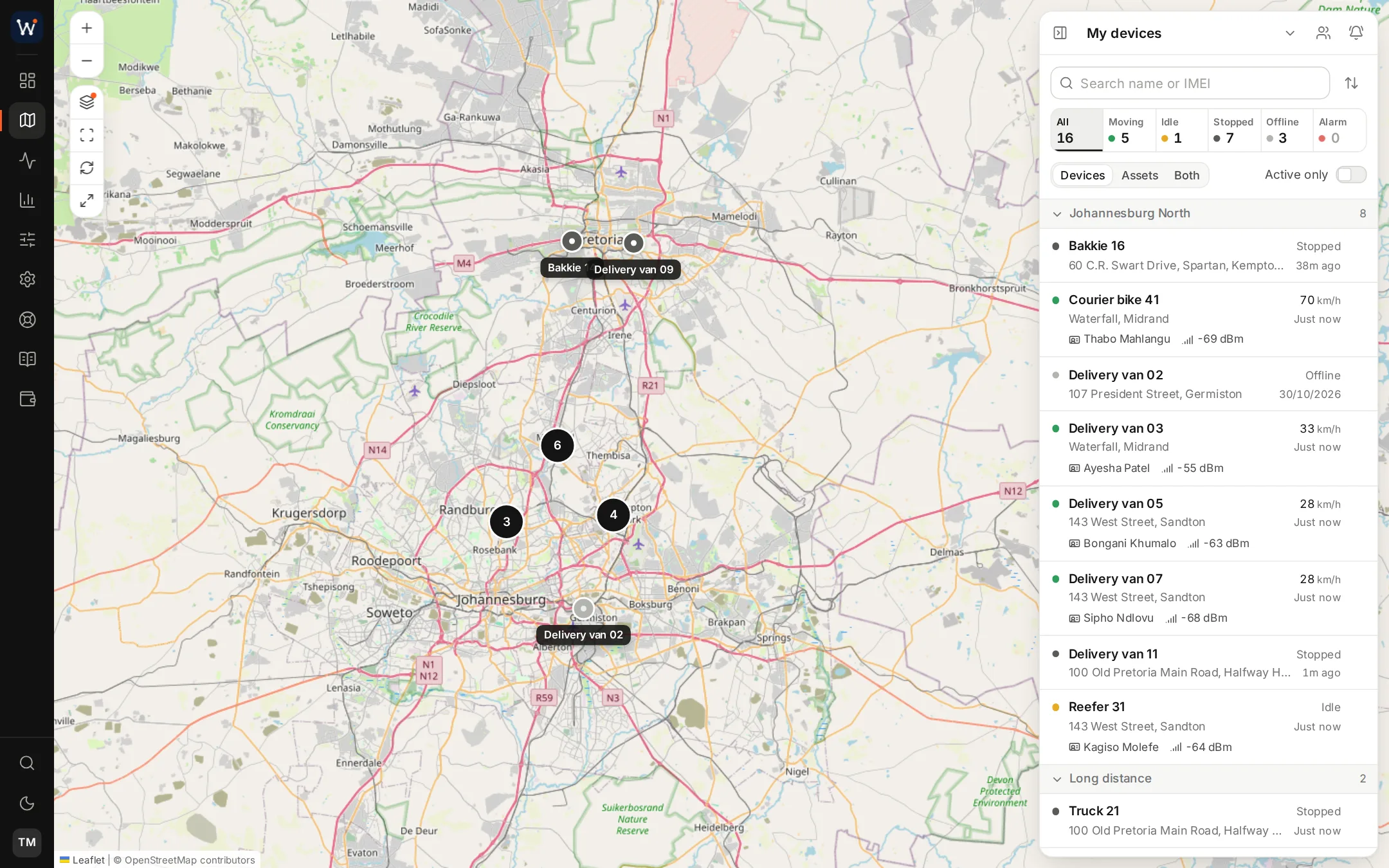
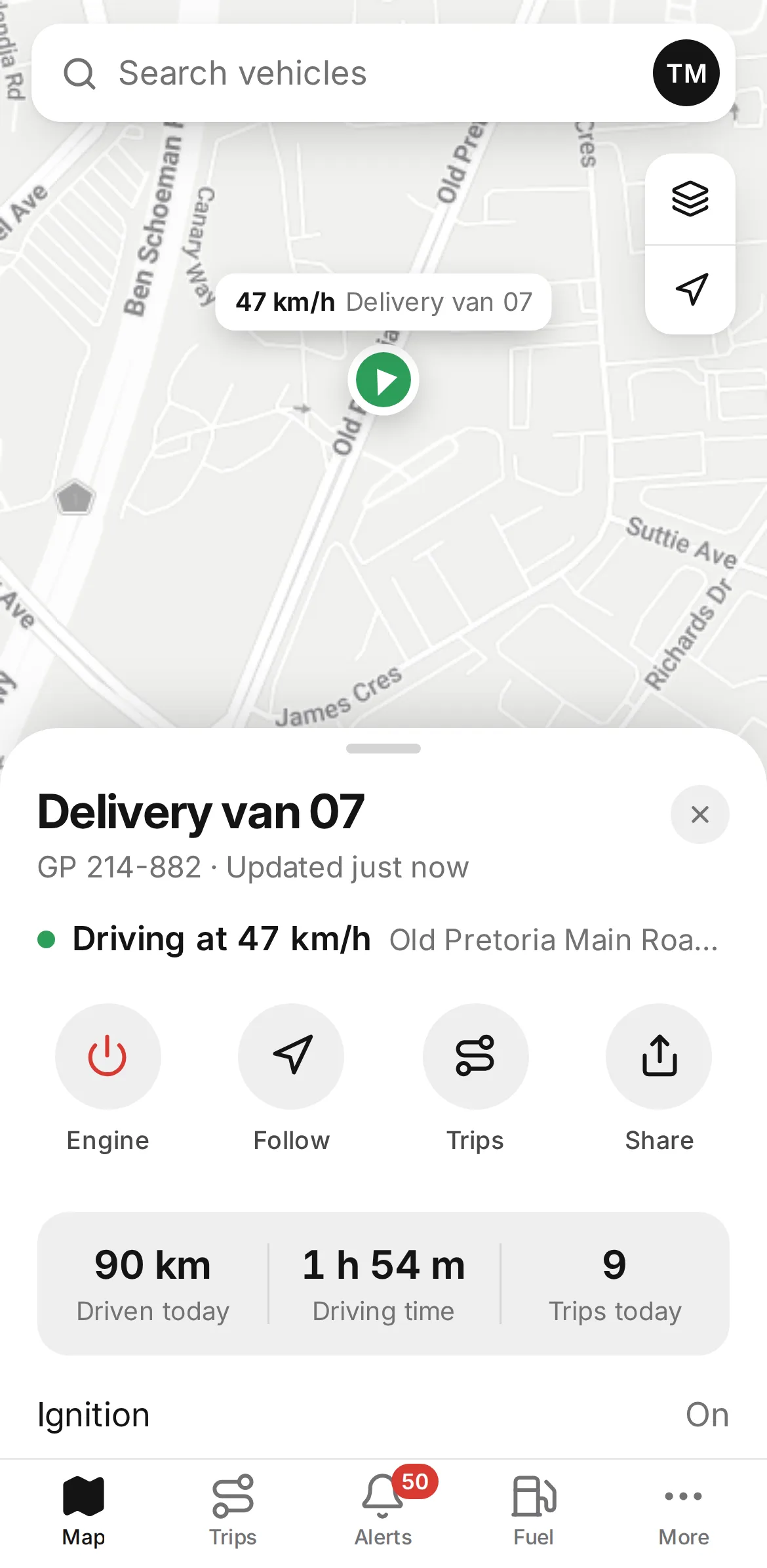
Three parts, one sign-in.
A plan is not an account on somebody else's system. It is a set of software running on a machine of your own, used by your team and by your clients.
The portal
Runs in a desktop or phone browser. Your staff add devices, set rules and bill clients there, and your clients use the same address to watch their own vehicles.
The Fleet app
A phone app that opens from your address and installs from the browser, showing your name and icon on the home screen. It uses the portal login. Optional, $50 once.
The server
A machine that serves your brand and no other, with a separate database, certificates and tracker ports. We install it, update it and back it up, so you never have to log in to it.
What the software does.
A short map of the modules. The features page goes through them one at a time, with the settings that matter when you sell them.
| Area | In short |
|---|---|
| Tracking and history | Live positions with clustering and Street View, trip replay with stops and speed, and 29 report types to export or schedule. |
| Alerts and geofences | Rules on speed, zones, ignition, sensors and alarms, sent by email, push, Telegram, WhatsApp or webhook. |
| Drivers | Identification by Bluetooth tag or WhatsApp, scores from 0 to 100 and tachograph files. |
| Vehicle data and video | Fuel in litres, CAN and OBD readings with fault codes, temperature tags and dashcam footage. |
| Jobs and deliveries | Routes for the day, a link on the driver's phone, arrival detected by GPS and signed proof of delivery. |
| Assets and maintenance | Equipment records with documents and expiry dates, backup units that take over, and service reminders by kilometres or calendar. |
| Clients and money | Client accounts, monthly invoicing per device, a ticket desk and a WhatsApp menu. |
From a tracker's message to a webhook.
The path one position takes through your server. The device support and API pages go deeper into the stages.
- Stage 1
The unit reports
A tracker sends its position, ignition state and sensor values to your server's host name, on the port that belongs to its protocol.
- Stage 2
A listener decodes it
Teltonika, GT06, JT/T 808 and a few other protocols are read by the platform's own listeners. The rest go through a protocol bridge.
- Stage 3
The record is saved
The server tells the unit a record has arrived only once the database holds it. Anything lost on the way is sent again.
- Stage 4
Rules and webhooks run
Alert rules test the new data, the map moves, and endpoints that subscribed to the event receive a signed copy of it.
Built for operators
Most of the people running it are tracking companies, installers and security firms selling tracking to other businesses, plus fleets that want a system of their own. One server can host many client accounts, and each keeps its users and vehicles to itself.
Run as a service
We build the server, issue its certificates, install updates and keep backups. Sales, hardware, fitting and your clients' questions are yours, and so is the money your clients pay you.
Before you look further
Is this the platform sold on whitelabelgps.net?
Yes. whitelabelgps runs this site as well, and the plans and prices match. The difference is emphasis: these pages spend their time on how the software and the server work.
Do I have to hire developers or rent hosting?
No. The server is set up and run for you as part of the plan. You need a domain name for the web address and access to its DNS settings, so you can add the record we send you.
What does a plan not include?
Hardware, SIM cards and fitting. A plan pays for the software, the server and its upkeep; trackers come from a supplier you choose, and SIM data from a local network operator.
How can I judge it with little risk?
Pay for one month and run it with real units. Should it disappoint, ask for your money back inside the first 30 days and the whole opening payment is returned.
The technical pages
Put it on your own server and try it.
Order online and your server is normally live the next day, with your domain and logo in place and the tracker ports open.